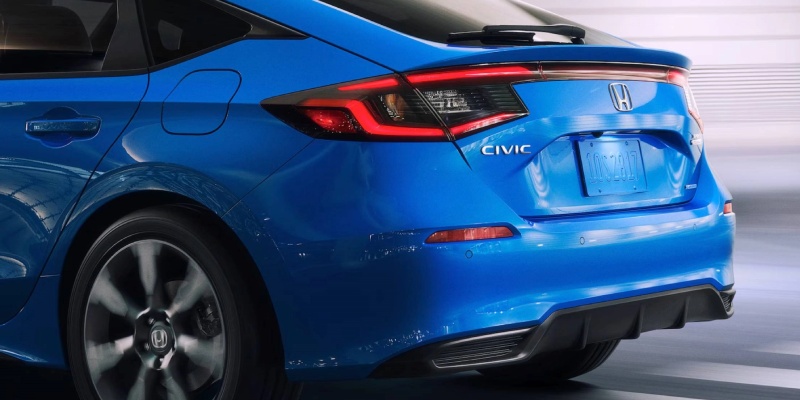
Honda of Oakland - Is the 2026 Honda Civic Hatchback or the 2026 Subaru Impreza better for Bay Bridge commutes around San Francisco, CA?
When you ask which compact hatchback feels easier, calmer, and more capable on a busy San Francisco–Oakland corridor, you usually end up comparing two stalwarts: the Honda Civic Hatchback and the Subaru Impreza. Both are versatile, tech-forward, and confident in daily driving. But the details matter—especially when your weekday includes on-ramp bursts, tight merges, variable speeds across the Bay Bridge, and a quick loop through neighborhood streets before finding parking.
In this deep dive, we break down what local drivers really notice: how each car accelerates into short gaps, how steady and quiet it feels at freeway speed, and how the tech helps (not distracts) when you need it most. We also tackle a frequent follow-up: if you occasionally head north on Highway 1 or east to open space in the hills, do you still need standard all-wheel drive, or will a smartly tuned chassis with driver-selectable modes do the trick for your life in the Bay Area?
Power and response that fit bridge traffic
Honda’s available 200-hp hybrid powertrain in the Civic Hatchback delivers instant torque that makes a difference in short-run acceleration. When you’re threading traffic at the I-80 and I-580 interchanges, quick response lets you commit to your move cleanly and rejoin the flow with less fuss. Subaru’s Impreza counters with a 2.0-liter engine and, on RS, a 2.5-liter SUBARU BOXER® engine for livelier acceleration. It’s responsive and familiar, particularly for drivers who like the linear feel of a conventional gas setup. The difference you’ll feel day to day is how the Civic hybrid’s torque comes on early and smoothly, so you can slide into gaps without downshift drama.
Ride quality and everyday calm
On the bridge or gliding across the Skyway, the Civic Hatchback’s tuning keeps the cabin composed. The sport-tuned MacPherson strut front and multi-link rear suspension track cleanly over expansion joints and patchwork pavement. It feels planted—supportive without being stiff. Impreza’s 4-wheel independent suspension provides steady stability, too, and standard Symmetrical All-Wheel Drive adds confidence when the road surface changes or the weather turns inland. If your route includes more varied terrain or you prefer the set-it-and-forget-it traction of AWD, the Subaru’s formula works. For most urban Bay commutes, the Civic’s quiet, settled ride adds up to less fatigue and more headspace.
Steering, braking, and confidence in tight spaces
Civic drivers appreciate steering that’s precise and predictable, with just enough weight as speeds rise. Hybrid trims add steering wheel-mounted deceleration selectors, letting you adjust regenerative braking so rolling to a stop in traffic feels smoother and more controlled. That finesse matters when you’re easing into a tight curb space near the Ferry Building or tucking into a street spot in SoMa. The Impreza’s steering tracks confidently, and with Active Torque Vectoring there’s an added sense of control when you arc through a cloverleaf ramp. Both cars are easy to park; the Civic’s multi-angle Rearview Camera with dynamic guidelines is a friend to city maneuvers.
Cabin tech that stays out of the way
For tech-savvy drivers, the Civic Hatchback’s available Google built-in on Sport Touring Hybrid pulls favorite tools—Google Assistant and Google Maps—right into the car. It pairs with Wireless Apple CarPlay® and Wireless Android Auto™ for no-cable convenience, and an available Bose premium sound system brings warm, detailed audio clarity to longer commutes. The Impreza standardizes an 11.6-inch touchscreen with wireless phone integration and, on RS, offers a Harman Kardon® premium system that’s crisp and powerful. The difference is integration: Google built-in lets you use native voice to set reminders, reroute on the fly, or call ahead without switching ecosystems.
Safety systems in real traffic
Both lineups lead with proven driver-assistance tech. Honda Sensing® is standard on every Civic Hatchback, with Collision Mitigation Braking System™ (CMBS™), Road Departure Mitigation (RDM), Adaptive Cruise Control (ACC), and Lane Keeping Assist System (LKAS) with Traffic Jam Assist. It’s tuned to be supportive rather than intrusive—helpful when you’re in variable-speed bridge traffic. Subaru equips every Impreza with EyeSight® Driver Assist Technology; Pre-Collision Braking and Adaptive Cruise Control with Lane Centering are confidence-inspiring, and Blind-Spot Detection with Lane Change Assist and Rear Cross-Traffic Alert are standard on RS and available on Sport. For 2026, Subaru adds standard rear-seat side airbags, another welcome layer of protection.
Cargo and convenience for city rhythms
Both hatchbacks make daily utility simple. The Civic’s wide, low hatch opening simplifies loading, and the 60/40 split rear seatback lets you quickly juggle cargo and passengers. The innovative side-pulling cargo cover is easier to access when you’re parked close to a curb. Impreza’s hatch is equally flexible and offers excellent overall interior volume; standard roof crossbar mounting points are ready for a bike rack or box. If your life involves frequent urban stops and varied errands, the Civic’s thoughtful small details—like Walk Away Auto Lock® and the quiet cabin—add up fast.
Who should choose which?
If your typical commute involves heavy bridge traffic, quick merges, and city parking, the Civic Hatchback’s hybrid acceleration, finesse in stop-and-go, and calm ride tuning provide tangible day-to-day benefits. If you regularly head out to trailheads with unpaved pullouts or prefer the added traction assurance in all conditions, the Impreza’s standard Symmetrical All-Wheel Drive is a compelling fit.
Below is a quick decision snapshot to bookmark before a test drive.
- Bridge acceleration feel: Civic Hybrid comes on strong with instant torque; Impreza RS offers responsive power with its 2.5-liter SUBARU BOXER® engine.
- Tech integration: Civic’s available Google built-in integrates voice navigation and apps; Impreza’s 11.6-inch touchscreen is intuitive with wireless phone integration.
- Everyday ease: Civic’s deceleration selectors and Walk Away Auto Lock® streamline city driving; Impreza’s standard AWD provides all-surface confidence.
If you want to try both back-to-back on familiar streets, Honda of Oakland can route a drive that mirrors your commute—on-ramps, lane changes, and a short stint on the Bay Bridge—so you can feel the differences where it counts. Our team is serving Berkeley, San Francisco, and Richmond, and we’re happy to talk through trims, tech, and the finer points of each car’s safety systems.
Frequently Asked Questions:
Does the Civic Hatchback’s hybrid feel different from a typical gas engine in short merges?
Yes. Instant torque from the hybrid system provides a stronger initial response, which helps when you need a quick, confident move into traffic. Drivers often describe it as smoother and more decisive, especially from 0–30 mph.
Is Subaru’s standard AWD a must-have for Bay Area driving?
It depends on your routine. If you regularly visit roads with varied surfaces or prefer the assurance of continuous AWD, the Impreza is a great pick. For primarily urban and freeway commuting, the Civic’s composed chassis and available drive modes deliver plenty of confidence without the added complexity of AWD.
Which infotainment layout is easier to live with day to day?
Both are user-friendly. If you value native voice assistance and deep integration, the Civic’s available Google built-in is compelling. If you prefer a single large screen with straightforward menus, the Impreza’s 11.6-inch system is excellent—especially with wireless phone integration.