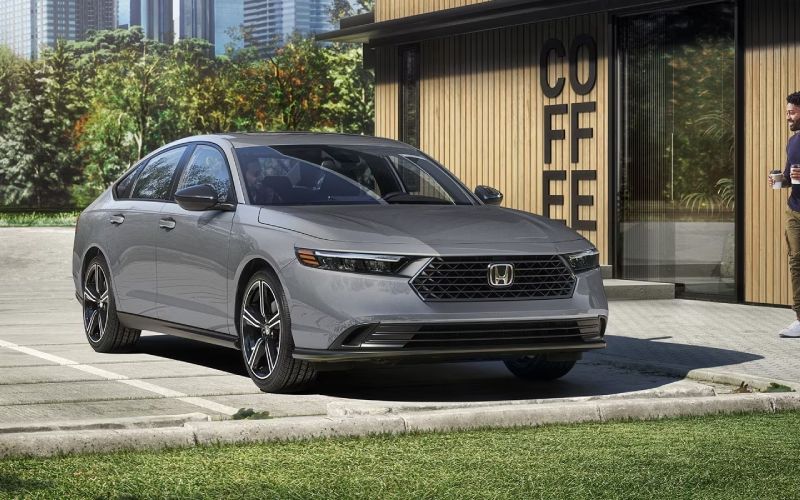
Honda of Oakland - Honda vs Mazda for City Commuting and Weekend Flexibility near San Francisco, CA
If you are shopping for a vehicle near San Francisco, CA, there is a good chance Honda and Mazda are both on your research list. Both brands appeal to drivers who want a vehicle that feels refined, efficient, and enjoyable without stepping into a luxury badge. For Bay Area shoppers, the decision often comes down to a real-world question: which brand better fits daily commuting, tight parking, bridge traffic, weekend errands, and occasional road trips beyond the city?
At Honda of Oakland, we work with shoppers from Oakland, Berkeley, Alameda, Emeryville, and San Francisco who need one vehicle to do a lot of things well. A car or SUV may need to handle crowded streets around SoMa, steep residential roads near Twin Peaks, stop-and-go traffic on I-80, quick grocery runs in Oakland, and longer drives to Marin, Napa, or the Peninsula. Mazda brings a strong sense of style and driver engagement to the table, while Honda stands out for balanced practicality, interior space, fuel-efficient engineering, long-term reputation, and everyday ease of ownership.
This comparison looks at Honda and Mazda as brands, with common models used as examples where helpful. The goal is not to dismiss Mazda, because Mazda builds attractive vehicles with upscale cabins and responsive handling. Instead, this guide focuses on the ownership experience that matters most to many local shoppers: commuting comfort, flexible cargo space, safety technology, hybrid availability, service convenience, and long-term confidence.
How Honda and Mazda Approach Everyday Driving
Mazda has built a strong identity around sporty handling and premium-feeling design. Many Mazda vehicles, such as the Mazda3, CX-30, CX-5, and CX-50, are known for responsive steering, elegant interiors, and a more driver-focused feel. If your top priority is a firm, connected drive with upscale styling, Mazda deserves consideration.
Honda takes a broader approach. Models such as the Honda Civic, Accord, HR-V, CR-V, Pilot, Passport, Odyssey, and Ridgeline are engineered to feel easy to live with every day. Honda vehicles are typically intuitive, roomy for their footprint, efficient, and straightforward to operate. That matters in a region where daily driving can include lane changes near the Bay Bridge, parallel parking in San Francisco, school drop-offs in the East Bay, and weekend cargo needs that change from one day to the next.
For many in-market shoppers, Honda’s strength is that it does not ask you to choose between comfort, efficiency, usefulness, and driving confidence. The Civic can be a smart commuter car, the Accord can feel relaxed and refined on longer drives, the CR-V can support family routines, and the Pilot can handle greater passenger and cargo demands. Mazda often feels more expressive from behind the wheel, but Honda often feels more complete across a wider range of daily needs.
Commuting near San Francisco: Comfort, Visibility, and Efficiency
San Francisco and the surrounding Bay Area place unique demands on a vehicle. A smooth commute may involve surface streets, freeway merges, bridges, hills, parking garages, and unpredictable traffic patterns. In this environment, visibility, seat comfort, low-speed smoothness, and easy-to-use technology can matter as much as horsepower.
Honda performs especially well for commuters because the brand tends to prioritize open cabin design, practical sightlines, and simple controls. Vehicles like the Honda Civic and Accord are well suited for drivers who split time between city streets and freeways. Honda hybrid models, including Accord Hybrid, CR-V Hybrid, and Civic hybrid variants, are also appealing for shoppers who want strong efficiency without needing to plug in.
Mazda vehicles are enjoyable in motion, and many shoppers appreciate the composed feel of a Mazda sedan or crossover. However, Mazda cabins can feel more cockpit-like, and cargo or rear-seat space may be tighter in some comparable segments. For a solo driver, that may not be a concern. For a commuter who also carries passengers, work gear, child seats, or weekend bags, Honda’s space-efficient design can make daily life easier.
- Honda commuter strengths: Smooth power delivery, efficient hybrid options, practical cabin layouts, excellent visibility in many models, and broad model variety
- Mazda commuter strengths: Sporty steering feel, premium design details, composed ride quality, and available i-Activ AWD® on many models
- Honda advantage for many Bay Area drivers: More emphasis on everyday room, intuitive use, and hybrid choices across key segments
That final point matters near San Francisco because a vehicle often has to serve multiple roles. A sedan may need to be comfortable for a Bay Bridge commute and spacious enough for weekend errands. A compact SUV may need to fit into a garage near Nob Hill while still offering useful cargo room for East Bay shopping trips. Honda’s lineup is especially strong in this kind of mixed-use ownership scenario.
Interior Space and Cargo Flexibility
One of Honda’s long-standing advantages is smart packaging. Honda engineers are known for creating cabins that feel larger than expected. This is easy to appreciate in models such as the CR-V, Pilot, Odyssey, and Civic Hatchback. Whether you are loading groceries, luggage, sports equipment, work supplies, or a stroller, Honda vehicles tend to make the most of available space.
Mazda interiors often feel upscale, with clean design and high-quality materials in many trims. The tradeoff is that Mazda sometimes favors style and a driver-focused layout over maximum space. A Mazda CX-5 or CX-50 can feel refined and enjoyable, but shoppers who compare cargo openings, rear legroom, and storage areas may find Honda models more accommodating for everyday use.
For local families and active drivers near San Francisco, that difference can be meaningful. A vehicle that feels easy to load after a Costco run in Richmond, a day at Golden Gate Park, or a weekend trip across the Bay can reduce daily friction. Honda’s design philosophy generally supports practical ownership without making the vehicle feel bulky or difficult to manage.
Safety and Driver-Assist Technology
Both Honda and Mazda offer modern safety and driver-assist technologies. Honda Sensing® is a major part of the Honda ownership experience, with features designed to support awareness and confidence on daily drives. Depending on model and trim, Honda Sensing® technologies may include systems such as Collision Mitigation Braking System™, Road Departure Mitigation System, Adaptive Cruise Control, and Lane Keeping Assist System.
Mazda offers i-Activsense® safety technology, and many Mazda models include a strong set of driver-assist features as well. Shoppers comparing both brands should review the specific model and trim configuration, because feature availability can vary. Still, Honda deserves special consideration for the way safety technology is integrated across much of the lineup. Controls and alerts are generally designed to feel approachable, which is helpful during dense traffic on US-101, I-580, I-880, or the Bay Bridge.
For shoppers who want confidence without complication, Honda’s user-friendly approach is a key benefit. Safety technology should support the drive rather than distract from it, and Honda does a strong job making these systems feel natural in everyday use.
Hybrid Options and Long-Term Ownership Confidence
Hybrid availability is one of the clearest areas where Honda has a strong advantage for many shoppers. Honda has placed significant emphasis on hybrid powertrains in core models such as Accord, CR-V, and Civic. For drivers who spend time in stop-and-go traffic near San Francisco, a Honda hybrid can offer a smooth, efficient, and responsive driving experience without requiring home charging.
Mazda has expanded electrified options, and the brand continues to evolve in that direction. However, Honda’s hybrid lineup is especially relevant for Bay Area drivers who want familiar fueling habits, strong efficiency, and everyday practicality. A hybrid Accord or CR-V can be a smart match for drivers who commute during the week and take longer drives on weekends.
Long-term ownership also includes service access and confidence. Honda of Oakland has served the Bay Area for over 40 years, and our dealership offers one of the largest selections of new, used, and certified pre-owned Honda vehicles in the area. Our Honda Express Service Center provides convenient maintenance support for services such as oil and filter changes, battery testing and replacement, wiper insert or blade replacement, exterior bulb replacement, air/pollen filter replacement, tire rotation, tire balance, tire repair, tire replacement, and brake inspection. Honda Genuine Parts and trained Honda technicians also help support the ownership experience after the sale.
Which Brand Fits Your Ownership Style?
If you want a vehicle that feels sporty, stylish, and slightly more premium in personality, Mazda is a strong competitor. Mazda can be a compelling choice for drivers who enjoy a more connected feel and place design high on the priority list. The brand has earned a loyal following for good reason.
If you want a vehicle that blends comfort, space, efficiency, technology, and ownership confidence, Honda is hard to beat. Honda models tend to feel purpose-built for real life: commuting, errands, family schedules, parking constraints, and weekend plans. Around San Francisco and the East Bay, that balanced approach often matters more than any single standout trait.
- Choose Honda if: You want roomy design, practical controls, strong hybrid availability, broad model selection, and a long-standing reputation for everyday dependability
- Consider Mazda if: You prefer a sportier feel, upscale interior styling, and a more driver-focused cabin experience
- Visit Honda of Oakland if: You want to compare new, used, or certified pre-owned Honda options with support from a Bay Area Honda team at 3330 Broadway in Oakland, CA
Our team at Honda of Oakland can help you compare Honda sedans, SUVs, trucks, and vans based on your commute, parking situation, passenger needs, cargo demands, and technology preferences. Whether you are coming from San Francisco, Berkeley, Richmond, Alameda, or right here in Oakland, we are ready to help make your search pleasant, informative, and stress-free.
Frequently Asked Questions:
Is Honda or Mazda better for commuting near San Francisco, CA?
Both brands can work well, but Honda often has the edge for commuters who want more interior space, intuitive controls, hybrid availability, and easy everyday comfort. Mazda may appeal more to drivers who prioritize sporty handling and premium-feeling design.
Does Honda offer more hybrid choices than Mazda?
Honda offers strong hybrid options in key models such as Accord, CR-V, and Civic variants. For shoppers who want efficiency without plug-in charging, Honda hybrids are especially practical for Bay Area traffic and longer regional drives.
Which brand is better for families, Honda or Mazda?
Honda is often the stronger fit for families because of spacious interiors, flexible cargo areas, and models such as CR-V, Pilot, and Odyssey. Mazda offers stylish SUVs, but Honda’s packaging and passenger-friendly layouts are a major advantage.
Where can I compare Honda vehicles near San Francisco, CA?
You can visit Honda of Oakland at 3330 Broadway in Oakland, CA. We serve shoppers throughout the Bay Area, including San Francisco, Berkeley, Richmond, Alameda, and Emeryville, with new, used, and certified pre-owned Honda vehicles plus service support.